
My friends, what we are watching unfold in Minnesota right now is not politics as usual. This is not simply disagreement over policy or rhetoric that’s gotten a little too heated. What we are seeing is a governor actively encouraging defiance of federal law—and that is a line that, once crossed, leads directly to chaos.
Governor Tim Walz has chosen to inflame tensions rather than restore order.
ICE officers are being ambushed in the streets. Protesters are no longer talking about peaceful resistance but openly calling for militancy … “by any means necessary.” And instead of condemning this behavior, Walz—the most dangerous governor in America— continues to smear federal law enforcement and frame the enforcement of immigration law as some sort of moral outrage.
Let me be very clear: enforcing the law is not retribution. Enforcing the law is not brutality. Enforcing the law is the basic responsibility of government.
What’s happening in Minnesota is the predictable result of years of selective enforcement and radical rhetoric.
When a governor encourages people to resist federal law enforcement, he is no longer governing—he is inciting violence and chaos.
When leaders tell people that laws are optional—when they encourage “resistance” against federal authority—they should not be surprised when that resistance turns violent. This is not theoretical anymore. Federal officers have been attacked. Weapons have been used. And the governor of Minnesota continues to pour gasoline on the fire.
This is why I say Tim Walz is the most dangerous governor in America. Not because of a single policy position, but because he is actively undermining the rule of law itself. And he’s doing so by inciting violence. A constitutional republic cannot survive when state leaders decide which laws matter and which ones don’t.
We are now at a crossroads.
The federal government has clear constitutional authority to enforce immigration law. When a state openly obstructs that authority—and when activists escalate from protest to militancy—the consequences become unavoidable. That’s why the Insurrection Act is now part of the national conversation. This is precisely the kind of breakdown it was designed to address.
We should never cheer chaos. We should never celebrate violence. And we should never pretend that anarchy is somehow virtuous. The rule of law is not optional. It is the foundation that allows a free people to govern themselves.
If Minnesota is allowed to continue down this path unchecked, it will not stop there. What’s happening today in Minneapolis can happen tomorrow in any state where leaders decide ideology matters more than law and order.
This is a moment that demands clarity, courage, and truth. That’s exactly what we’re going to continue to provide—without apology.
Conservative, not bitter.
Todd
Key Highlights from Today’s Toddcast
🚨 ICE officer ambushed in Minneapolis
⚖️ Rule of law openly undermined by state leadership
🔥 Calls for militancy replace ‘peaceful protest’
🏛️ Federal authority directly challenged
📜 Insurrection Act enters the conversation
🧭 America faces a constitutional crossroads
Quote of the Day
If men were angels, no government would be necessary.
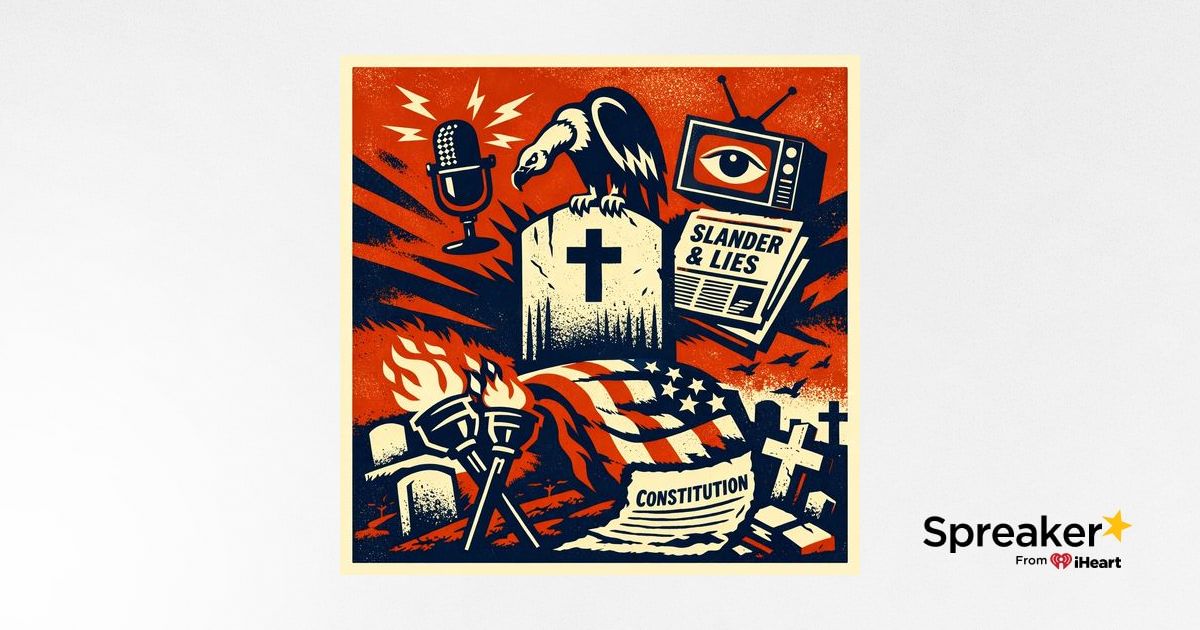
Todd Talk: When the Media Dances on Graves, We Have a Spiritual Crisis
My friends, if you don’t think America is in a spiritual war, watch what happens when someone on the Right dies.
Scott Adams, the creator of Dilbert, passed away from prostate cancer at 68. Almost immediately, the media showed us exactly who they are.
Instead of leading with his work or basic decency, the New York Times smeared him as a racist. People Magazine resurrected old political attacks.
That’s not journalism. That’s evil.
Being on the wrong side of the political aisle now means being maligned in life and dishonored in death. Scott Adams was not who the media claimed, just like millions of good, decent conservatives.
This isn’t disagreement. It’s spiritual sickness.
As for me, I resolve to tell the truth, maintain human decency, and refuse to join the vultures.
The Truth Immigration Narratives Really Tell You
Someone recently sent me an article and asked a fair question: “Are they intentionally leaving any truths out of this?”
(Here’s the article he sent me, if you want to read it for yourself.)
The individual agreed that people here illegally don’t have a right to stay, but he was trying to understand what seemed like a gray area.
His instinct is correct. They are leaving truths out of this story—and that’s the case in most other stories about illegal immigration and deportations.
Most immigration stories, especially the ones framed to provoke outrage, are intentionally vague. Not always because every detail is false, but because what’s missing is doing most of the sinister deception.
The article in question came from World Relief, and it condemned U.S. Immigration and Customs Enforcement for detaining individuals described as “lawfully present refugees.” That phrase alone should raise questions.
One Bad Example Used to Justify the End of All Enforcement
Here’s the first thing to understand. The long-term strategy of open-borders advocates is simple.
Find one emotionally compelling example of enforcement gone wrong and use it to argue against all enforcement.
If one case looks unfair, then the whole system must be immoral. That’s the logic. It’s effective and powerful, but misleading.
No enforcement system is perfect. But highlighting a single disputed case without context isn’t honest journalism. And it’s deceptive.
Policy Whiplash Creates Confusion
Second, each presidential administration interprets and enforces at least some laws in a slightly different way. And in some cases, in a dramatically different way. That’s the case with how immigration law has been interpreted and enforced by Biden and Trump. It’s night and day different.
The Biden administration consistently chose the most lenient interpretations humanly possible on immigration. The Trump administration has interpreted the same statutes far more aggressively in favor of enforcement and deportation.
That matters.
When interpretations change, people who were mid-process under one set of rules can suddenly find themselves out of compliance under another. That’s not cruelty. That’s what happens when the executive branch swings wildly from one extreme to the other.
Legal Status Is Conditional, Not Permanent
This is the part almost no one tells you.
Being granted lawful immigration status is not necessarily permanent. Or if you consider it permanent, it is at least conditionally permanent.
If a non-citizen violates the terms of their legal status—by committing certain acts, supporting prohibited organizations, or otherwise breaking the conditions under which they were admitted—that status can be revoked. Completely. Legally.
This is not a loophole. That’s the law.
It’s also something that does not apply to natural-born citizens. Immigration status is conditional by design. That’s how the system has always worked.
Judges, Ideology, and Legal Chaos
Add another layer of complexity: constant legal challenges.
Every enforcement action is scrutinized by courts. Conservative judges interpret statutes as written. Liberal judges are often activist judges, reading personal philosophy and preference into the law.
The result is conflicting rulings, temporary injunctions, and endless confusion—none of which make for clean headlines and easy-to-understand realities.
The Real Irony
Here’s the final irony.
We’re now debating the enforcement of cases on the extreme edges because immigration law was flagrantly ignored for decades.
Wide-open borders, selective enforcement (often no enforcement at all), and political pandering and cowardice created the mess we’re in.
Now, when the law is finally enforced, it’s portrayed as heartless or as political retribution.
But despite what emotionally charged articles suggest—sometimes intentionally and sometimes unintentionally—immigration laws are not being flagrantly disobeyed today. At least not by the Trump administration.
In fact, immigration law was flagrantly disregarded for decades by previous administrations, and we’re living with the consequences of that now.
The chaos we’re seeing is the price of restoring order after years of deliberate neglect, and no amount of vague, emotional storytelling can change that reality.
That doesn’t mean we shouldn’t ask questions. We absolutely should. In fact, we should ask questions about anything the government is doing, especially in an area as complex and consequential as immigration enforcement.
But we shouldn’t have a knee-jerk emotional reaction and label something evil before we understand what’s actually happening. The better move is to slow down, seek full clarity, and make a judgement based on the truth—not the narrative.